Blog article
AI in the Non-profit Sector: Between Promise and Essential Questions
On 6 March 2025, KCS attended a meeting on artificial intelligence organised by HEC Volunteers For Good and Tous Bénévoles. Here are the opportunities we noted, and the points we believe non-profits should watch.

By Karma Com Solidarité
Published on
Updated on
3 min read


On 6 March 2025, KCS (Karma Com Solidarité, a French non-profit that brings volunteers' professional skills to non-profits, businesses and local authorities) attended a meeting organised by HEC Volunteers For Good, a volunteering group of HEC Paris alumni, and Tous Bénévoles (in French), a French volunteering platform. The subject was one that unsettles our certainties and opens up huge possibilities for the non-profit sector: artificial intelligence. We paid particular attention to the opportunities AI could offer to help non-profits achieve more (in French), while keeping in mind the ethical and practical challenges this technological shift raises.
AI: A Powerful Tool for the Non-profit Sector
The round table covered three questions:
-
How can AI help non-profits work more effectively?
-
What new challenges need to be taken into account?
-
What practical applications and approaches are organisations such as the French Red Cross putting in place?
Enthusiasm for AI is undeniable, but it needs to be approached with a critical mind and a realistic view. At KCS, we believe AI can be an indispensable tool, and we remain committed to a human approach, centred on the values that give the non-profit sector its strength.
The talk by Théo Alves Da Costa (Data for Good, a French non-profit of volunteer data specialists, in French) helped us see the potential of AI for the common good, and the need for a responsible, transparent approach.
These are the points of vigilance that seem essential to us:
-
Accessibility for all: AI must not widen the gap between non-profits that can afford to adopt it and those that are left out. Training and hands-on help must be put in place so that every organisation can benefit from it.
-
Ethics at the heart of what we do: the use of AI in the non-profit sector must be guided by strong ethical principles, particularly on protecting personal data and tackling algorithmic bias.
-
People first: AI must not replace the human contact and empathy that define the relationship between non-profits and the people they serve. It should strengthen those ties and free up time for the work where people matter most.
Artificial intelligence is a major opportunity for the non-profit sector. By adopting these technologies thoughtfully and ethically, non-profits can achieve more and serve their beneficiaries better.
At KCS, we are determined to help organisations through this digital transition. With that conviction, we want to put our skills at the service of non-profits, to help them find their way through the complex world of AI.
Many thanks to Isabelle Persoz (founder of Tous Bénévoles) and Nicole Villaeys for the invitation, and to Tous Bénévoles and HEC Alumni for organising this meeting. At KCS, we are ready to take up the challenge of AI for a stronger non-profit sector that achieves more, with people at the heart of our approach.
Read next
 27 September 2026
Why KCS, Why Now?
Why strengthening our ability to understand, choose and act matters as technological, demographic, environmental and social change accelerates.
 Adel Riame
 4 February 2026
An Accessible Website, Protected Volunteers: A Founding Choice
When people plan a new website or app, they tend to talk about design, features and performance. Accessibility too often comes last. At KCS, it was there from the first discussions.
Jade Perrot 29 September 2025
Artificial Intelligence: Challenges, Changes and the Search for Accessible, Responsible AI for Non-profits
Artificial intelligence is changing every sector, and it brings real social and democratic risks. Karma Com Solidarité argues that it is time to imagine an AI grounded in solidarity, transparent and sovereign, that serves the common good.
 Zeineb Zhioua
 23 September 2025
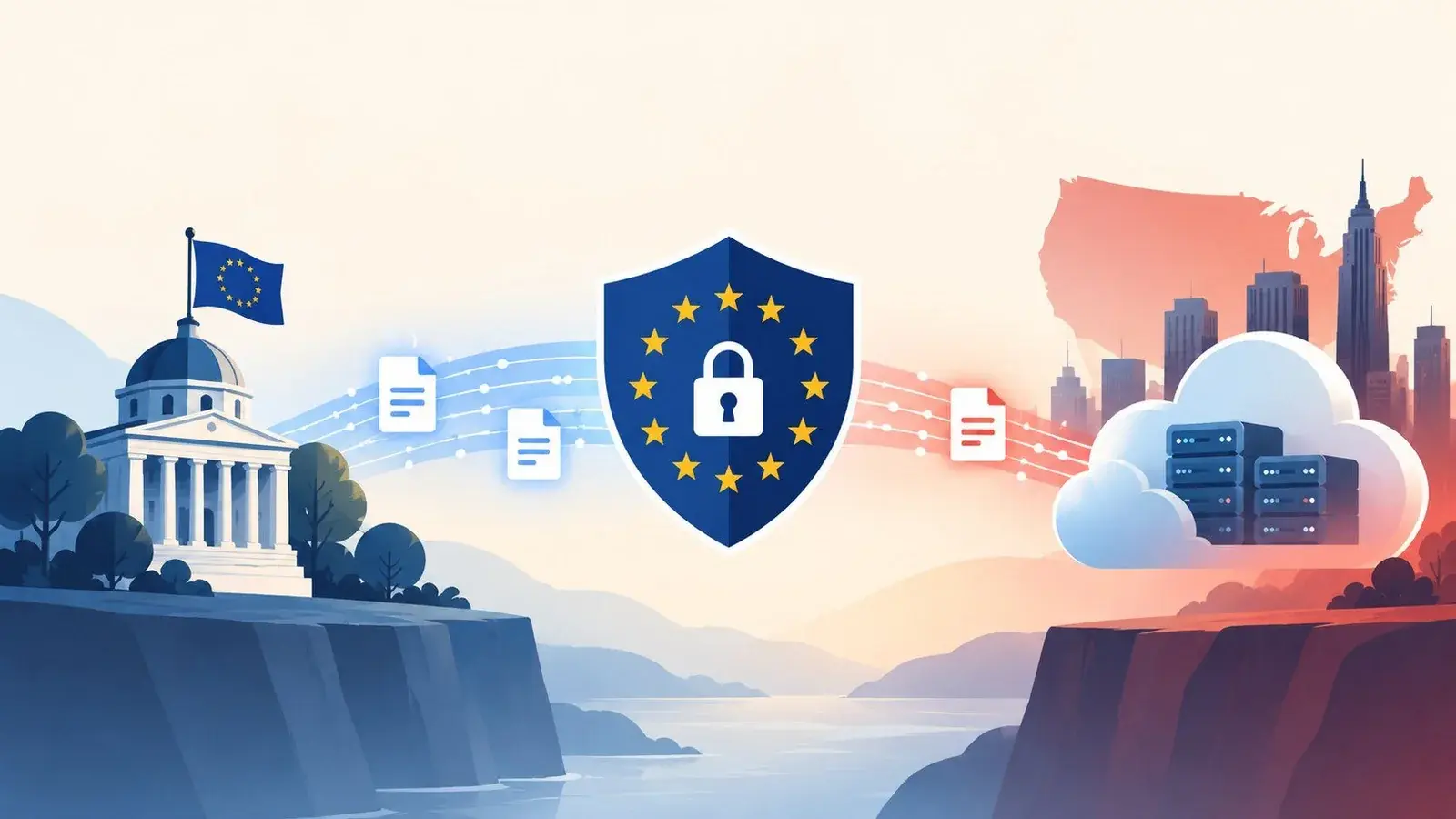
Data Transfers, GDPR Compliance and US Digital Services: What Is at Stake for Public-Interest Organisations?
When a non-profit's data goes through Google, Microsoft or Adobe, is it really protected? An overview of the EU rules on transferring personal data to US providers, and of what they require from public-interest organisations.
Sarah Meillier 21 May 2025
Digital Inclusion: Why Your Content Might Be Excluding Millions of Users
In France, around 7.7 million people report a restriction of activity or a severe functional limitation. This guide sets out the standards for accessible digital content and why they matter.
Adel